The catalogue moved. The website found a new purpose.
An ageing online store had become difficult to update and had been hacked more than once. With the product catalogue now at Composite Deck Shop, I rebuilt DecksToronto around what people need before they buy: clear advice, a realistic starting budget and a plan for their deck.
Visit DecksToronto- Client
- DecksToronto / Composite Deck Shop
- Audience
- Homeowners planning decks in Ontario
- My work
- Strategy, content, UX/UI, project photography and photo editing, development, SEO migration and lead workflow
- Approach
- Website rebuild, content redesign and migration
- Launched
- 7 October 2026
From a place to shop to a place to start.
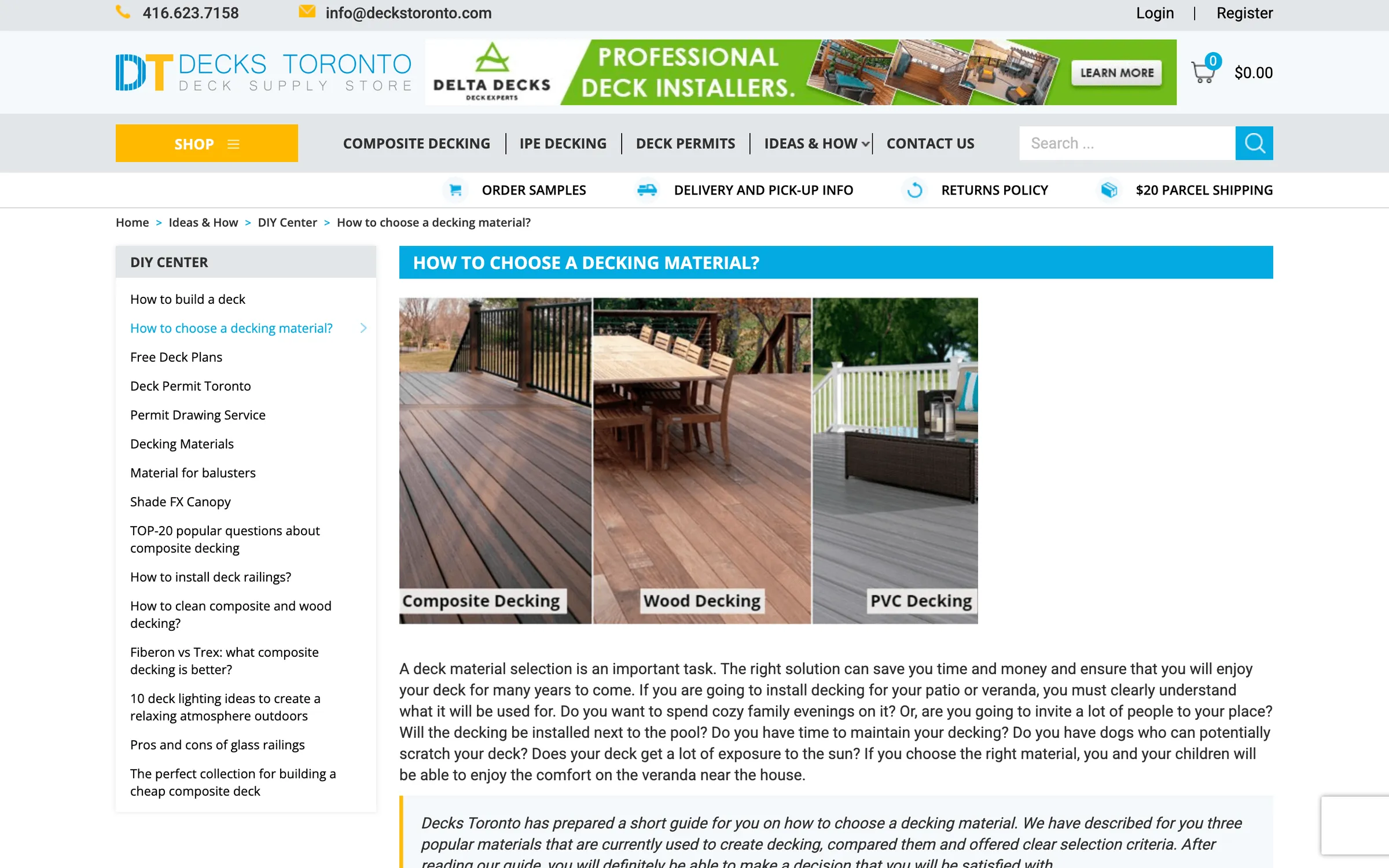
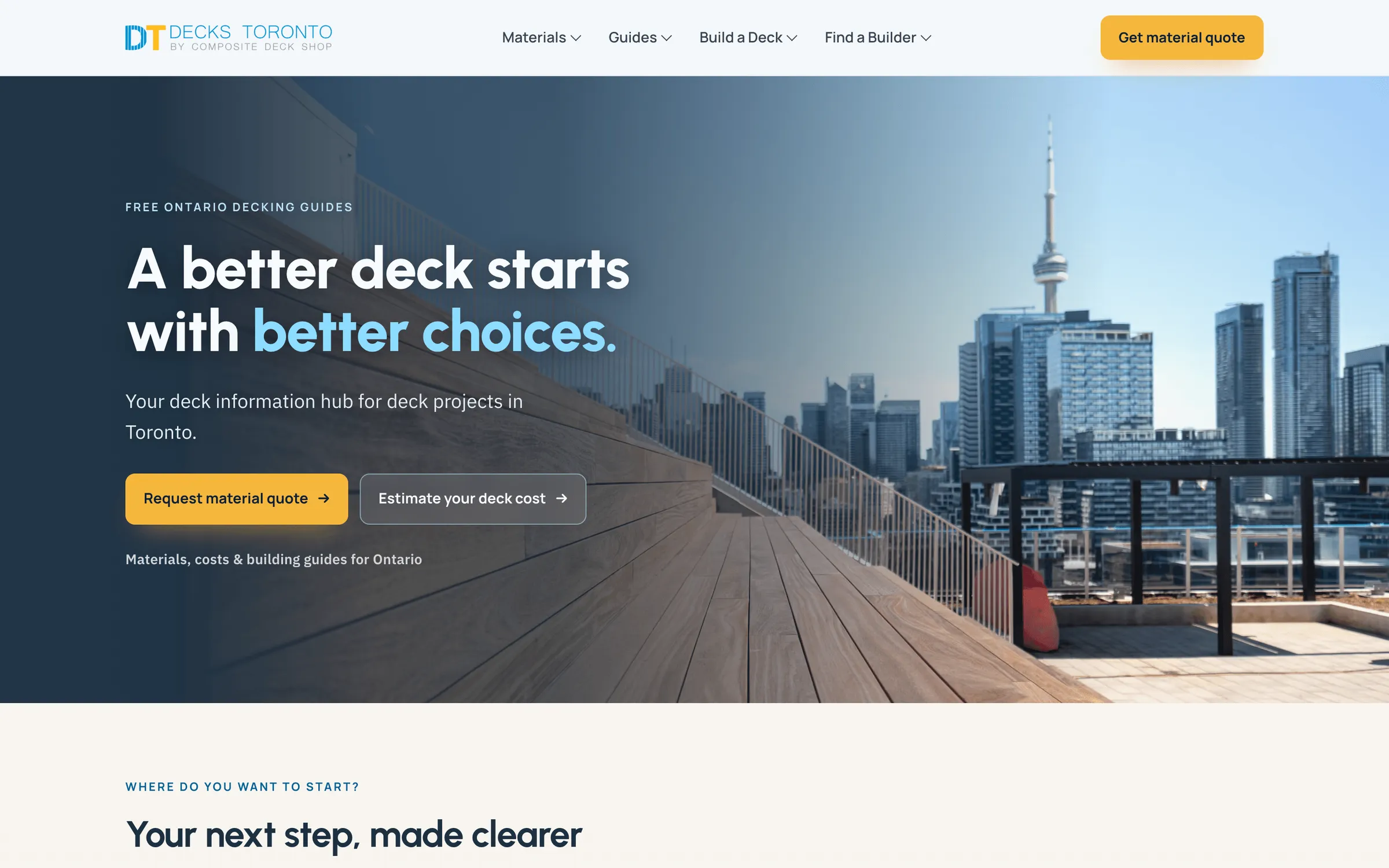
The detail is where the design does its work.
Project photography, clear comparisons and practical price cards help visitors move from inspiration to a more informed choice. These five views show how the finished site brings that journey together.
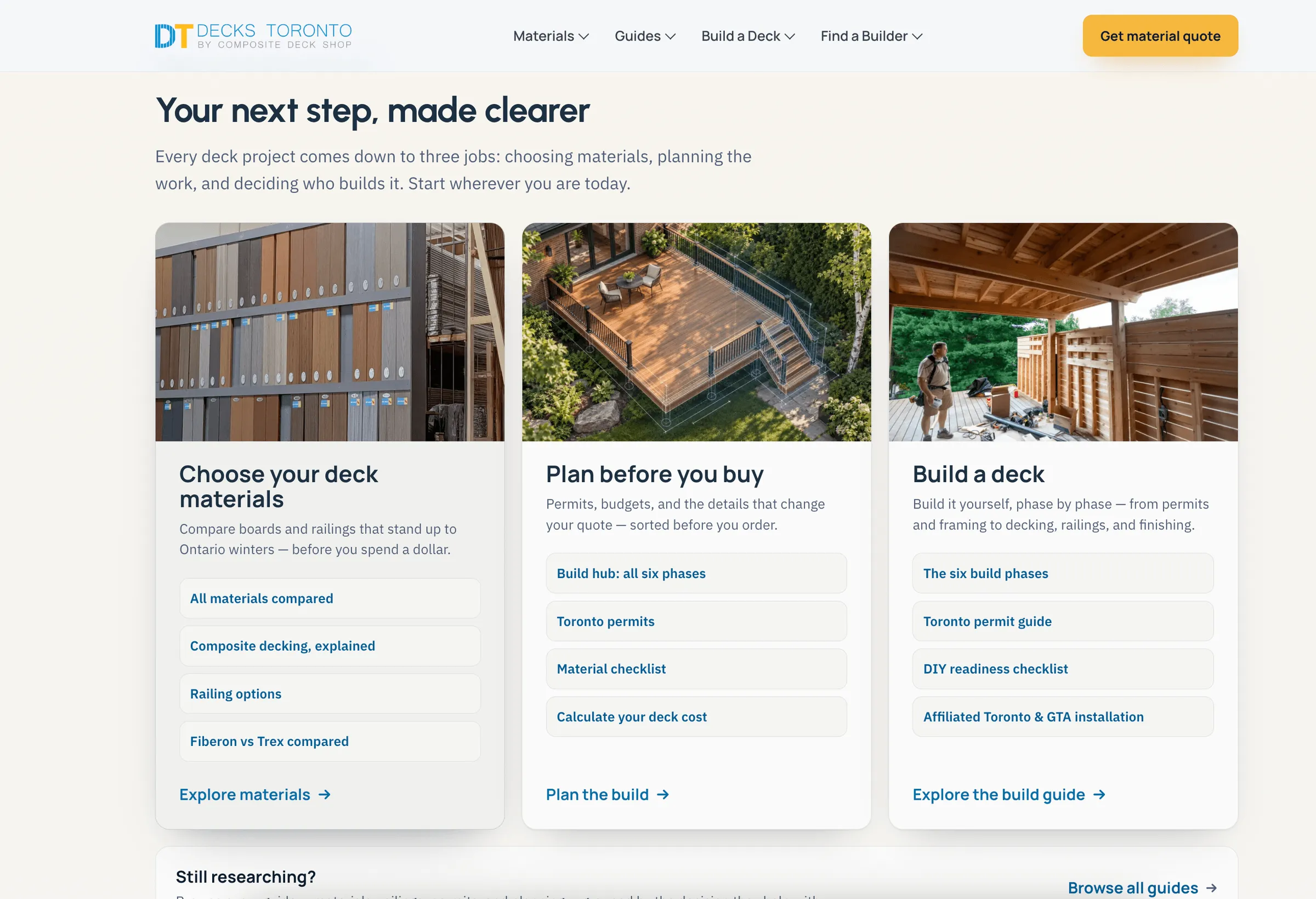
A useful starting point for every project.
Three visual routes help visitors choose materials, plan the work or explore how to build. Each card pairs a project image with practical links, so people can start with the decision in front of them.
Explore the homepage ↗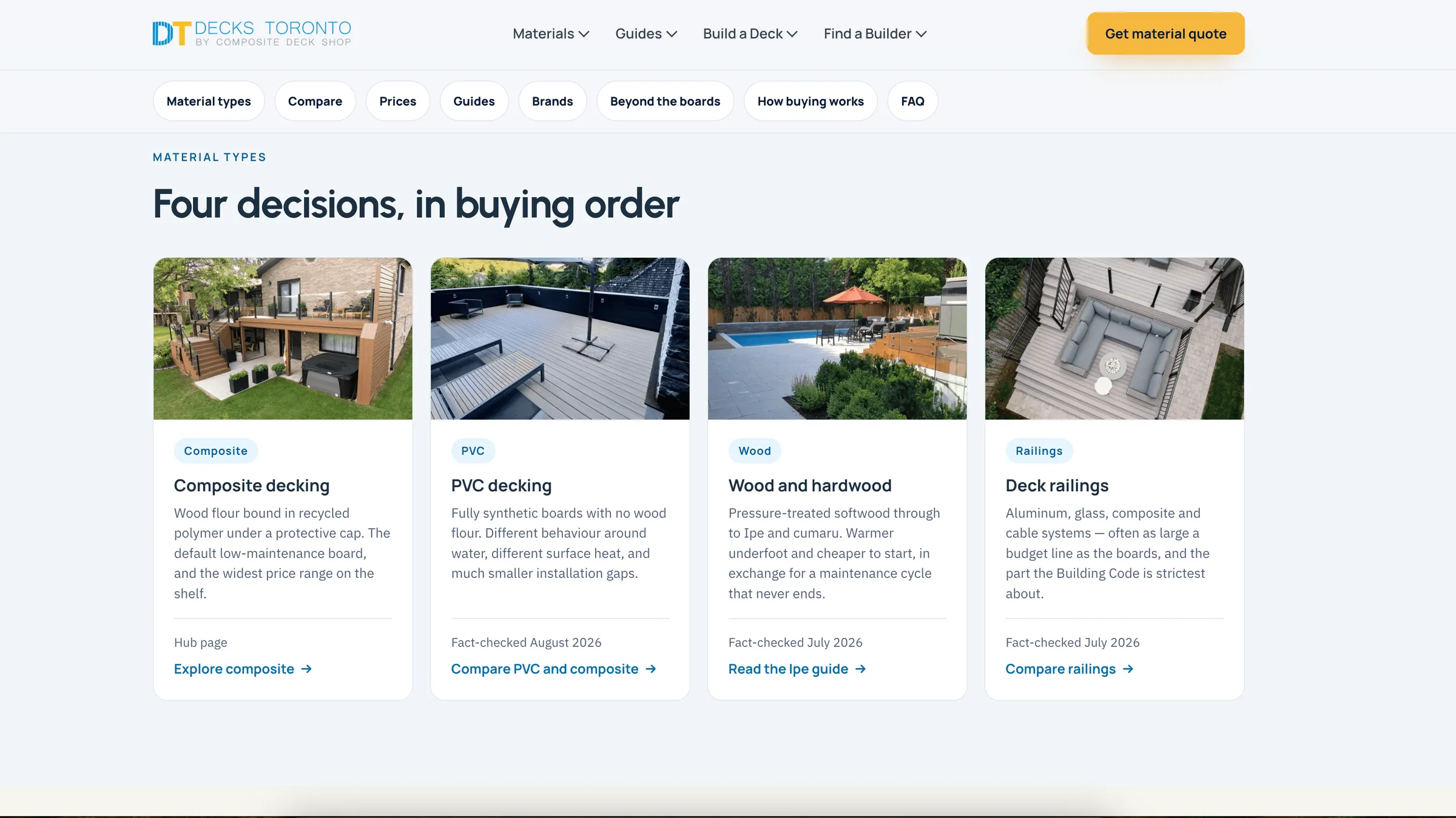
See the options before choosing the boards.
Project photographs introduce composite, PVC, wood and railings. Short explanations and direct links help readers find the relevant guide without working through a product catalogue first.
Explore the material types ↗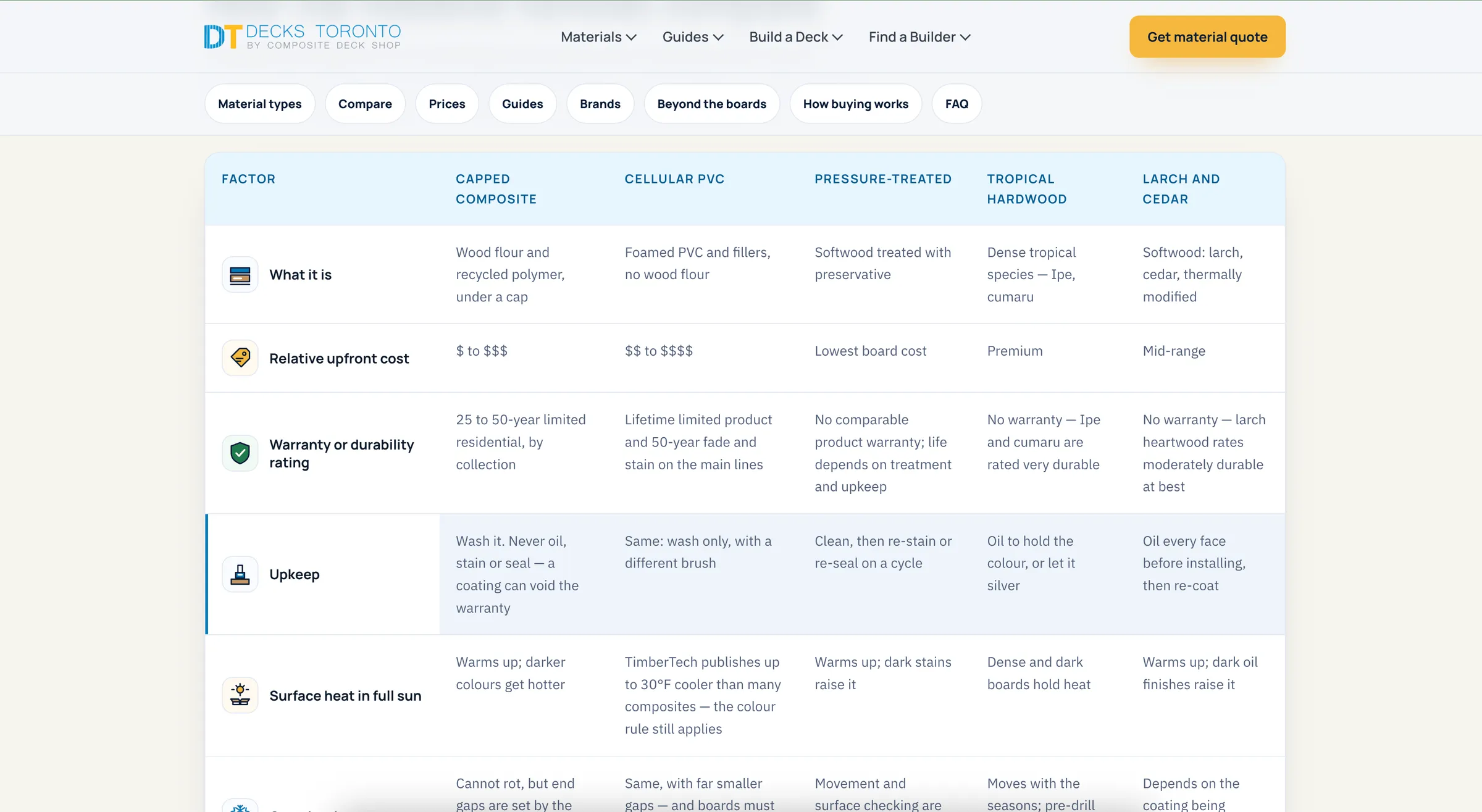
Make the trade-offs easier to compare.
A shared table puts the material families side by side. Cost, upkeep, durability and surface heat follow the same structure, with icons and clear row labels that make a detailed comparison easier to scan.
View the comparison ↗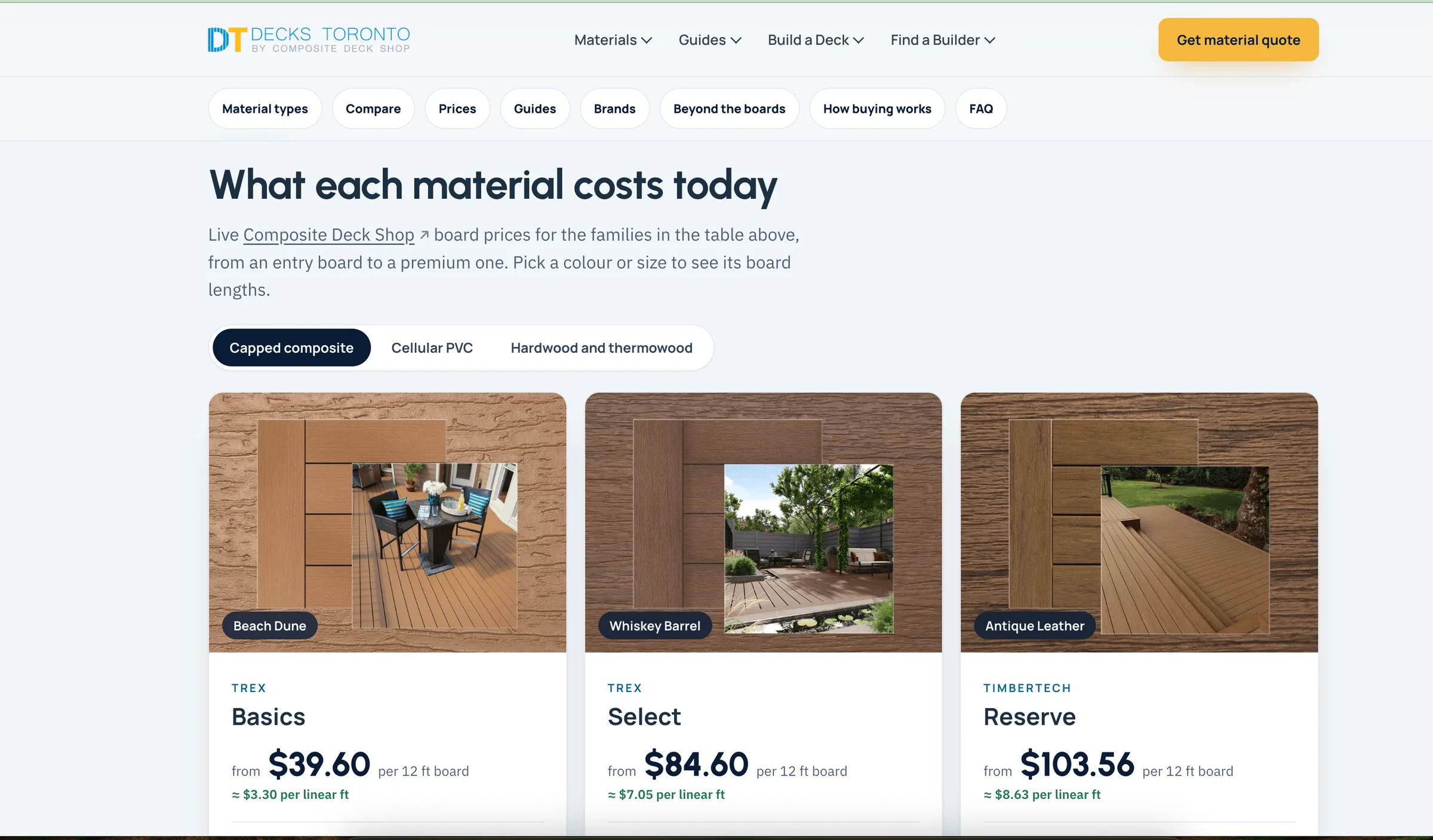
Connect the look to the starting price.
Board textures and finished-project images sit beside prices from Composite Deck Shop. Material tabs and per-board and per-foot figures give readers a practical starting point for their shortlist.
Explore material prices ↗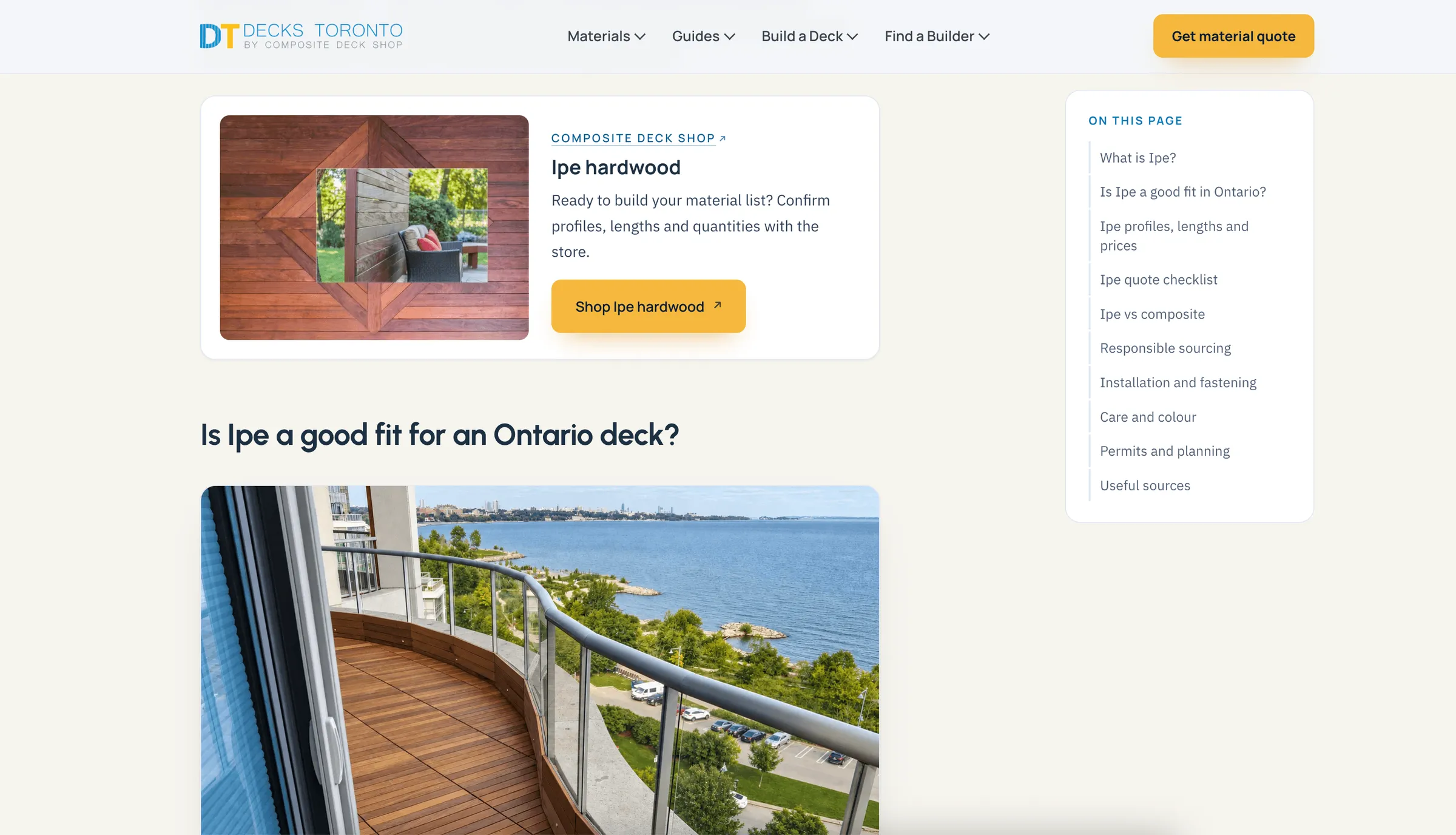
Show the material in a real setting.
The Ipe guide pairs practical advice with a large waterfront balcony photograph. A visible contents menu keeps the article easy to navigate, while a contextual shop card gives readers a next step when they are ready to buy.
Read the Ipe guide ↗A site that needed more than another repair.
The old site relied on outdated technology that had not been maintained. Publishing and changing content was cumbersome. Routine improvements took more technical effort than they should have.
There was also a recurring security problem: the site faced repeated attacks and compromises, with incidents documented in July and August 2026. Recovery work kept taking time away from improving the customer experience.
Meanwhile, the main product catalogue had moved to Composite Deck Shop. That left an important question: what should DecksToronto do for people now?
The answer was to make it useful earlier in the buying journey. Help someone compare boards, understand the build, work out a starting budget and prepare better questions. Then connect them to the shop or an installer when they are ready.
A new role, backed by a careful migration.
Indexable pages at launch
Each checked for a working response, the correct canonical URL and no accidental indexing block.
Migration checks passed
Approved legacy URL decisions tested on the live HTTPS domain, including redirects and deliberately retired pages.
Build phases to follow
A practical route from planning and permits through framing, boards, railings and finishing.
Delivery and migration checks recorded at launch on 7 October 2026.
Turn “How much?” into a useful conversation.
The calculator lets visitors explore a budget with their own dimensions and material choices. The itemised estimate updates as they go, and their selections carry into the quote request.
Try the deck cost calculator ↗Material, sample and installation requests are saved in a shared journal and routed to the right team.
Keep the knowledge. Make room for what comes next.
I rebuilt the old storefront as a modern resource for planning a deck. Consistent page layouts and reusable content sections make future updates easier to manage, while carefully sized images keep the reading experience light.
The old URLs still mattered. I mapped product routes to the shop and useful informational routes to their new destinations, alongside canonical URLs, a new sitemap, structured data and social previews. All 128 unique shop destinations in the migration checks returned a working page at launch.
DecksToronto now has a clear reason to exist alongside the shop: help people make a better deck decision, then give them a useful next step. The catalogue has its home. The advice has one too.
See the finished website ↗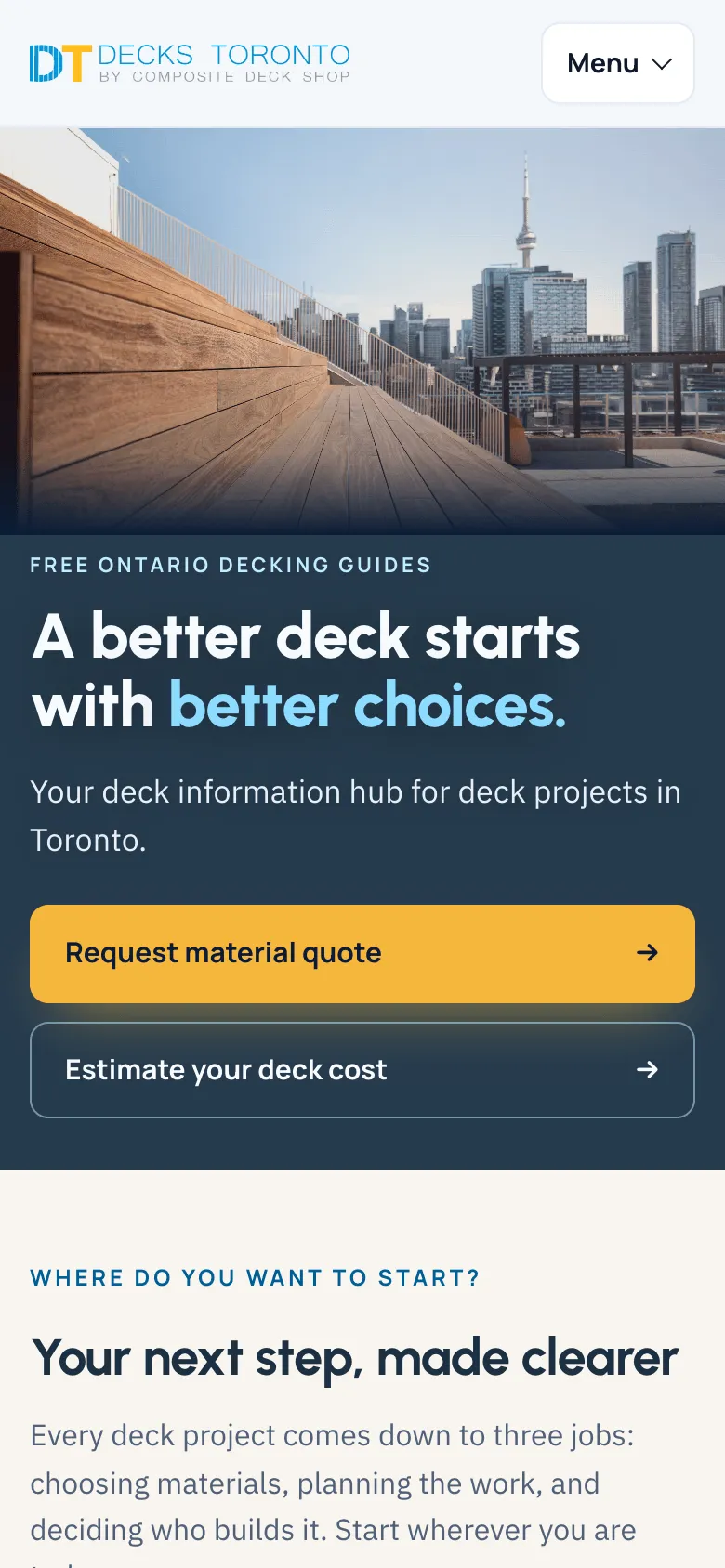
A rebuild should make the next step clearer.
Tell me what your site needs to do for your customers and your team.